

Why AOAC Certification Matters for Mycotoxin Testing (And What Myco7 Changes)
Mycotoxins don’t play by convenient rules. They’re heat-stable, invisible to the eye, and produced by moulds that can contaminate a crop long before it reaches the lab. Aflatoxins, ochratoxin A, DON, zearalenone, fumonisins, T-2/HT-2, each with its own regulatory limit, and each one a genuine risk to human and animal health if it slips through.
For food and feed testing labs, the question isn’t whether to screen for mycotoxins. It’s how to do it accurately, quickly, and in a way that stands up when a regulator, auditor, or customer asks, “how do you know your results are reliable?”
That’s where AOAC certification comes in.
What AOAC Certification Actually Tells You
AOAC INTERNATIONAL is one of the most respected independent bodies validating analytical methods in food testing. A method with AOAC certification has undergone rigorous, third-party evaluation of its accuracy, precision, and reliability across relevant sample matrices.
In practice, that means when a method is AOAC-certified, it’s not just trusting the manufacturer’s word for it. It’s relying on an independent seal of approval that customers, auditors, and regulatory bodies already recognise and trust.
One Panel, Seven Toxins, One Platform
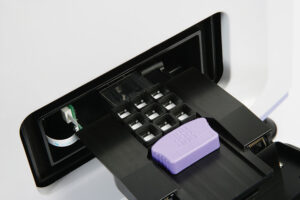
This is where Myco7 fits in. Run on our Evidence Investigator platform, Myco7 is an AOAC-certified panel that screens for seven key mycotoxins from a single sample, no need to run separate assays for each toxin, and no compromise on the rigour each result needs to hold up.
For labs handling grain, feed, or other high-risk commodities, that combination matters in two ways:
- Confidence in the result. AOAC certification means the method has already cleared an independent bar for accuracy and reliability, so you’re not left defending the data matrix by matrix.
- Confidence in the workflow. Screening seven mycotoxins in one run on one platform means less time spent switching between assays and more time spent acting on the results.
Why This Matters Beyond the Lab Bench
Every mycotoxin result that leaves the lab feeds into a decision somewhere else: a shipment gets released or held, a batch gets accepted or rejected, a supplier relationship gets strengthened or questioned. The stakes attached to that single number are rarely just about the test itself.
Having a panel that’s both efficient to run and independently certified means the people relying on your results, whether that’s a regulator, a customer, or an internal QA team, don’t have to take anything on faith.
That’s ultimately what good mycotoxin testing is about: not just detecting contamination but giving everyone downstream a result they can act on with certainty.
Want to see how Myco7 on Evidence Investigator could fit into your lab’s mycotoxin testing workflow?
Email us: info@randoxfooddiagnostics.com
Visit our website: https://randoxfood.com/feed-and-cereals-analysis/